Everything that one does seems, no matter how right it may be, to bring on the very thing which is most to be deplored.
-Bram Stoker, Dracula
Everything that one does seems, no matter how right it may be, to bring on the very thing which is most to be deplored.
-Bram Stoker, Dracula
Fascinating: Seeing Our Own Reflection in the Birth of the Self-Portrait via Dan Cohen I’ve been fascinated by self-portraits ever since I saw Degas’s at the Getty about 12 years ago.
I’m kind of loving my messy, curly, 38% Ashkenazi hair today. (Image heavily filtered, of course.)

I’m worried about Kimberly. Kimberly is tired & overwhelmed. Kimberly has lots of tools to help her but she’s kind of tired of people reminding her to use the tools. Kimberly just wants someone to give her permission to rest. I, Kimberly, hereby give Kimberly permission to rest.
Me: Meh, I guess I should dress professionally for this remote group career coaching session. throws cardigan over video game t-shirt Eh. Close enough.
My kid is watching @JimTheLibrarian’s Dinosaur Storytime. Kid said, “Maybe I’ll meet him sometime!” I said, “Maybe. That would be nice.” So I guess we have to go to an ALA Annual once those are a thing again. 💛
HELLO I DON’T WANT TO STAY MOTIVATED AND ON TRACK. I WANT TO WALLOW AND READ GOTHIC NOVELS.

Want to read: Can’t Even by Anne Helen Petersen 📚
I ordered a used copy of a paperback that was published in 1969. It was listed as being in good condition, with no specific defects noted. It arrived with the cover missing a corner and about to fall off, which places it either in fair or binding copy territory, but not good. I think most purchasers of used books haven’t thoroughly reaearched used bookseller condition standards. But this one has. (I’m trying to return it. We’ll see what happens.)
Has a book ever broken you? By that I mean, all books after it suffered in comparison for some indefinite period of time, regardless of their quality. It hasn’t happened often for me. It happened a bit with Patrick Rothfuss’s THE NAME OF THE WIND. Well, more than a bit. Even the next book in the series didn’t scratch my NotW itch.
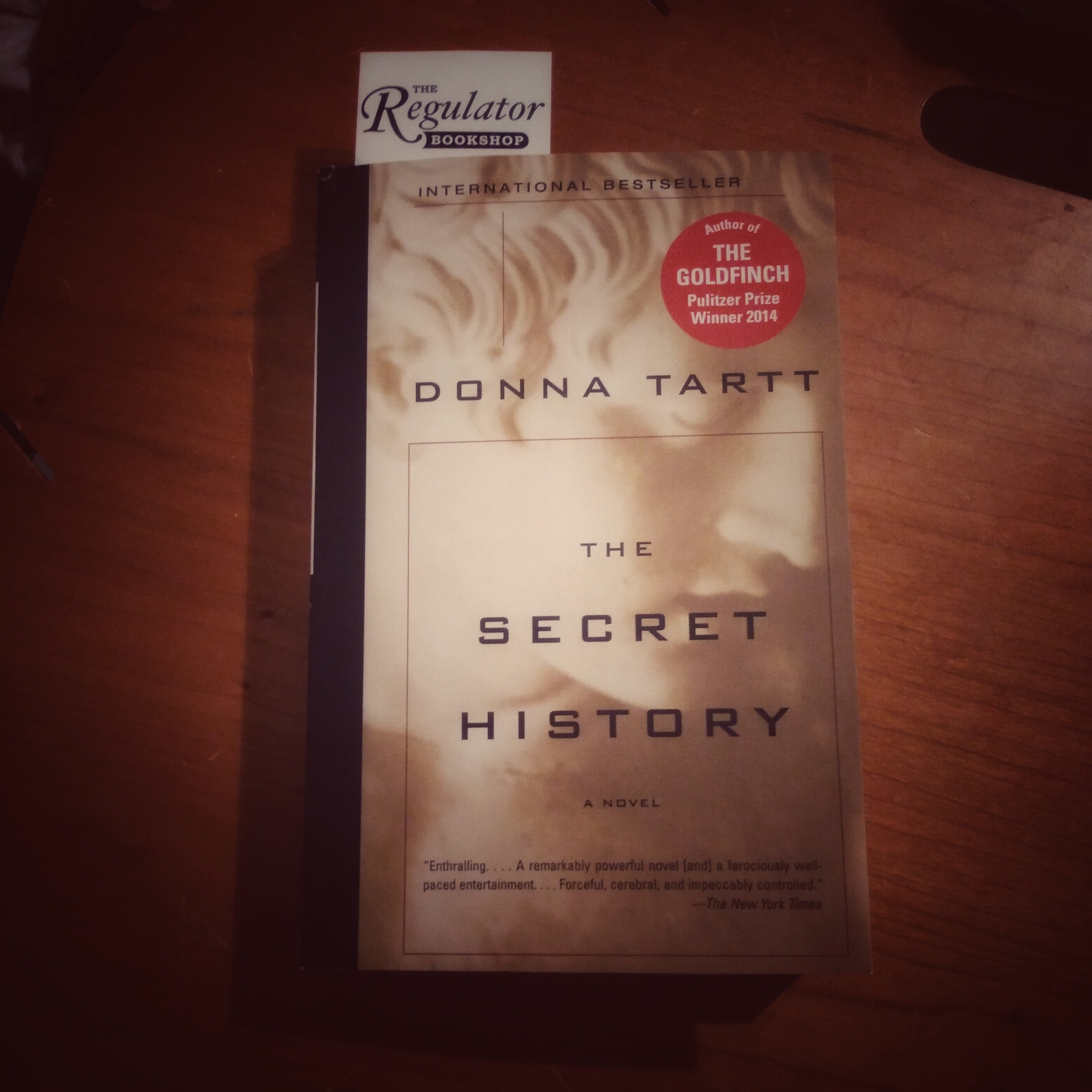
Now I’ve discovered a new thing - not when a book breaks you, but when a book sticks to you like a heavy meal, when a book leaves you too full to try anything else for a little while. I finished Donna Tartt’s THE SECRET HISTORY a few days ago. It is still sitting with me, and I think I’ll probably need to take a break from fiction for a while, while I continue to digest this book.
I found it immensely compelling and stayed up way too many nights reading it. It was a ton of fun and then maybe the last 10 - 25% wasn’t as fun but was still compelling.
This is the book that is at the heart of the Dark Academia aesthetic. It’s about a bunch of beautifully pretentious early-20-something college students living in the early-mid 1980s, attending a college that is a very thinly veiled version of Bennington College, a small, private liberal arts college located in North Bennington, Vermont. (Last year, Esquire published an amazing oral history of the school during this time period). We know from the start of the book that one of the friends in the clique has been killed by the others, but not why. We learn why through a narrative of the months leading up to the murder.
One of the things Tartt does so beautifully in this book is describe the physical environment: the sounds of leaves crunching under feet, the quality of sunlight streaming through trees, the luxuriousness of a professor’s artfully appointed office. I think that it’s really this, and the characters’ intense obsession with classical Western literature, especially Greek and Latin, that attracts people to the aesthetic it inspired.
The pacing of the book contributes to its power, too. It begins quickly, with the narrator Richard getting out of his mundane California existence to go to this beautiful New England school, where he at first is not permitted to register for Greek because the only professor of it hand-selects his students. Richard begins to carefully observe the students who are in the class, and endears himself to them somewhat by assisting with their Greek homework. Eventually, the professor accepts him into the class and he comes into the inner circle of a group that seems elegant and mysterious to him but, as I read it, strikes the rest of the school as mostly… weird. The pacing once he’s in the group becomes languorous, with descriptions of visits to a countryside mansion, gentle boat rides across a lake, days spent lounging around reading. This is the stuff of dreams, my friends. But then, as we approach the murder mentioned at the beginning, the pace picks up, becoming more frantic, and by the end of the part describing Richard’s college life, it is frenzied. This is the part where I had less fun - but again, it was still compelling to read.
Someone who has been acquainted with the book longer than I have has probably done an analysis of the ways in which its structure mirrors Greek tragedy.
It’s a literary thriller, technically historical though almost contemporary with when it was written. If it sounds like you’ll like it from what I’ve already said, you should definitely check it out.