
Sometimes you and a friend come up with a hilarious idea and then a year later your friend executes it. #shiptember2020
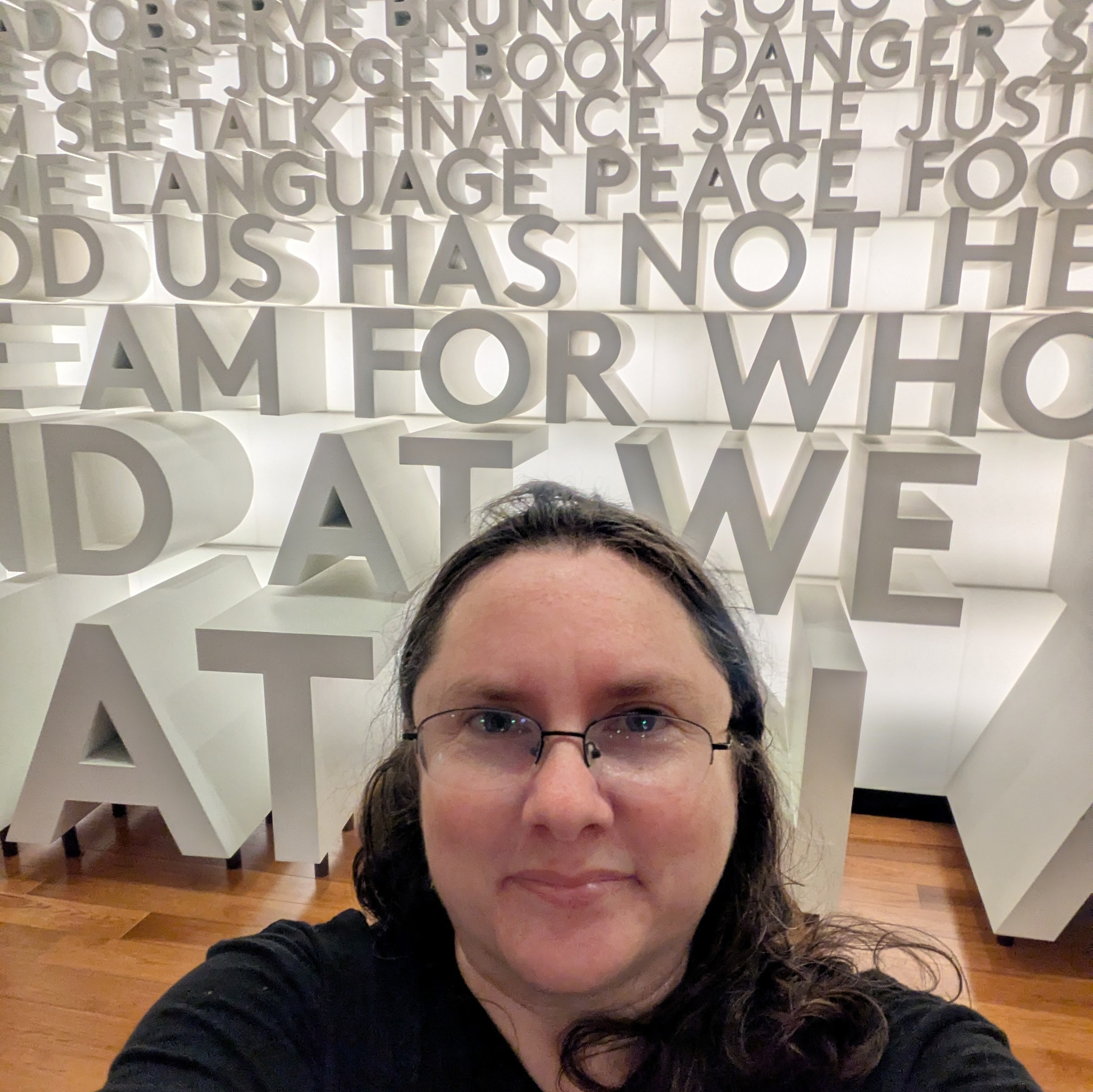
Planet Word Museum in Washington, DC
Hi there! I'm Kimberly Hirsh. My pronouns are she/ her/hers. I'm somebody's mom. I work as a school librarian. I have a PhD in information and library science. I love to read, play tabletop and video games, and make things. I used to perform in theater and improv comedy and I may one day again. I have been extremely online since 1993 and still enjoy tinkering on the web. I manage multiple chronic illnesses. I'm married to my kid's dad. We have a cat.
Want to get in touch? You can reach me by email.
Recent posts
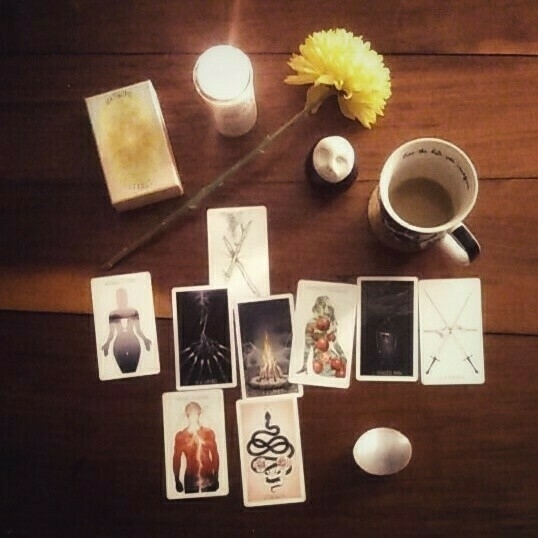
Had to use the Wayhome Tarot for Lindsay Mack’s Coming Home to Ourselves spread, if course. I, um, had to draw a few extra cards for clarification.
I’m still/again grieving the dissertation I planned and will not get to carry out. Maybe I will do the missing pieces later. Maybe not. For now, all I know is I’m sad about it.
Becky Albertalli wrote this moving essay about her shifting understanding of her sexuality. The longer I live, the more I think we all gain a more nuanced understanding of our identity over time.
🔖📚 From Petra Mayer at NPR: Welcome To Story Hour: 100 Favorite Books For Young Readers
Well, that’s a help in choosing which books to share with my kid next. A nice mix of classics and newer stuff.
🔖📚 From Megan Mabee at Book Riot: How The Hunger Games Prequel Helped Me Realize I’ve Changed
I can relate to Mabee’s realization that being a mother has changed how she responds to books.
📚 I’m reading MEXICAN GOTHIC and it’s wonderful but every description of the house gets me sidetracked thinking about all the Gothic novels I haven’t read yet and how much I want to read them, too.
📽️ I am watching BLACK PANTHER for the first time. The fact that every single Wakandan is awesome is not a surprise, but it is a delight. I was like, “Okoye is the best! Wait, no, Shuri is the best!” but there need be no best, they’re all wonderful.
I could use less productivity advice or inspiration and more permission to just be.
I fell on the basement stairs yesterday and mildly sprained my right ankle. I sprained the left one falling on different stairs in January. I’m having one of those times when it’s hard to be friends with your body.