
💻 Completed MDN’s What’s in the head? Metadata in HTML, HTML text fundamentals, and Test your skills: HTML text basics.
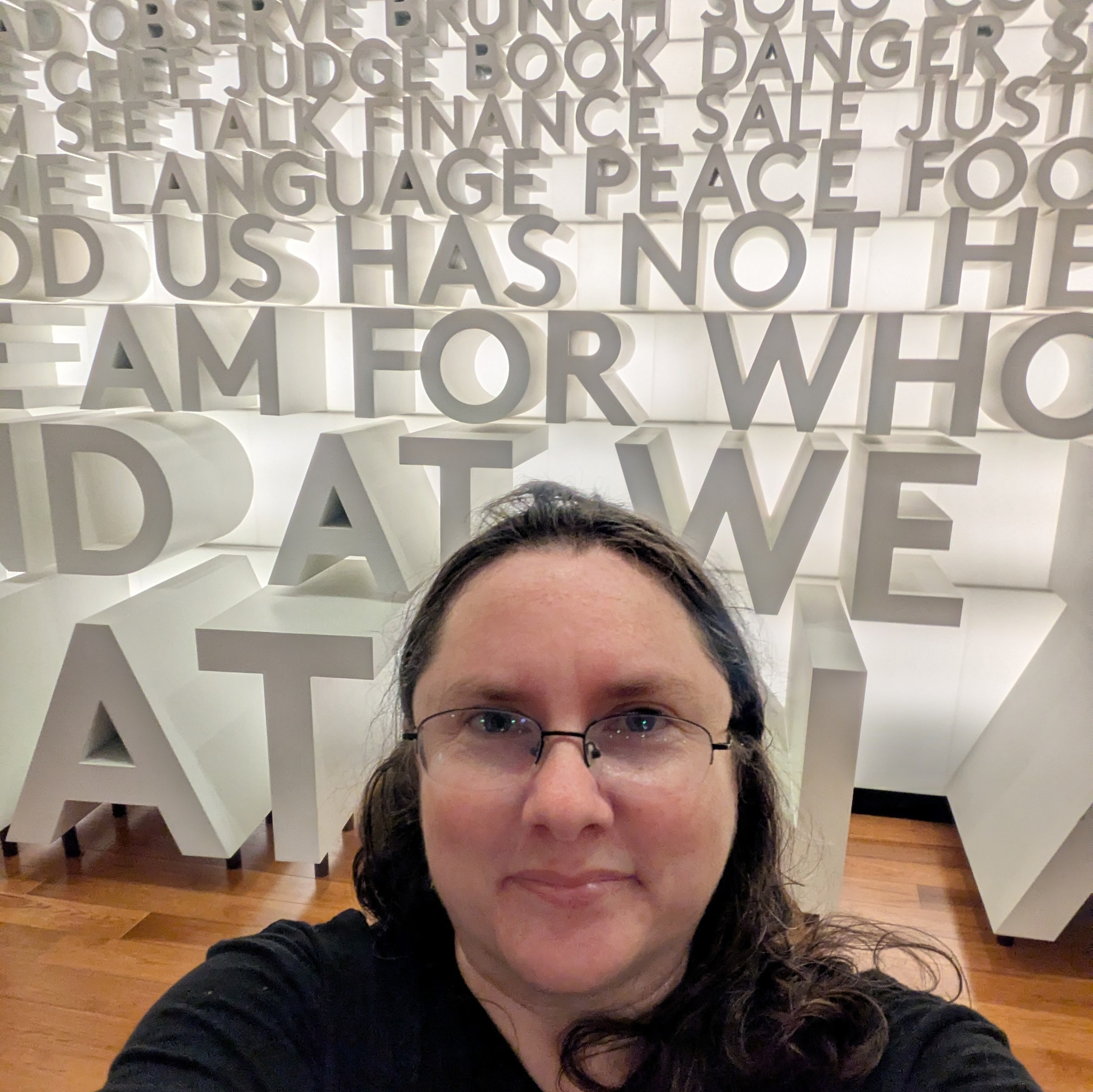
Planet Word Museum in Washington, DC
Hi there! I'm Kimberly Hirsh. My pronouns are she/ her/hers. I'm somebody's mom. I work as a school librarian. I have a PhD in information and library science. I love to read, play tabletop and video games, and make things. I used to perform in theater and improv comedy and I may one day again. I have been extremely online since 1993 and still enjoy tinkering on the web. I manage multiple chronic illnesses. I'm married to my kid's dad. We have a cat.
Want to get in touch? You can reach me by email.
Recent posts
💻 Completed Mozilla Developer Network’s Getting started with HTML
🔖 Read:
- How the Web works by Mozilla Developer Network
- HTML by Mozilla Developer Network
- Introduction to HTML by Mozilla Developer Network
- Taking Note: What Commonplace Books Can Teach Us about Our Past by Taylor Pipes
- The Commonplace Book as a Thinker’s Journal by Kevin Eagan
💻 Completed Mozilla Developer Network’s Publishing your website.
💻 Completed Mozilla Developer Network’s Javascript basics.
Doing a big Tumblr unfollow, too. Messages and asks are open, though.
Doing a big Twitter unfollow over the next few days (probably of literally everyone), then will add folks back as I miss them, or add them to lists. But my DMs are open for now and things will still crosspost to Twitter from kimberlyhirsh.com.
Reclaiming my Spotify recommendations
My kid has taken over my Spotify recommendations. My Discover Weekly this week includes:
- Rainbow Connection - from The Muppet Movie
- the theme song from Lilo and Stitch
- Yo Ho (A Pirate’s Life for Me)
- the Spider-Man theme
- the Sonic X theme
- 10 in the bed
- a song that is actually called “Pee Pee Poo Poo”
- and other songs, including songs from the Lego Ninjago Movie, Phineas & Ferb, The Lego Movie 2, Teen Titans Go! to the Movies, Despicable Me, the Road to El Dorado, and an album called _Sharing Time).
There are 30 songs on every Discover Weekly playlist. Of mine, I think about 25 are kid-targeted. I’ve skimmed multiple articles about how to maximize the value of your Discover Weekly playlist. Almost all of them promise that listening to kids’ music will not fill your Discover Weekly playlist with kids’ music. Maybe I just don’t listen to enough other music. I don’t know. But I’m taking steps to get Spotify recognize that I want it to recommend new things for ME, not for my kid.
First: I realized I’d created an account just for my kid on our Spotify family plan a couple years ago, but wasn’t using it. Now, I log into his account when I’m going to play music for him. Is it a small hassle? Yes. Is it an obvious solution? For sure.
Second: I had 27 playlists dedicated to music for my kid. I rarely used any of these - he goes through seasons where he’ll want a couple songs on what he calls “repeat two,” so I had several of these - one for The Lion King that was only “I Just Can’t Wait to Be King” and “Hakuna Matata,” one for Frozen that was only “For the First Time in Forever” and “Love is an Open Door,” one that had just “The Rainbow Connection” from The Muppet Movie and then the version from The Muppets. This sort of thing, and after a couple weeks, he doesn’t want to listen to that playlist anymore. I deleted all of the playlists that were for my kid. I didn’t lose much curation over this, but I sure cleaned up my account a lot.
Then I started following the advice from the articles. So far I’m mostly doing these two:
- Saving music to my library.
- Going down rabbit holes on artists and genres: listening to complete discographies, exploring similar artists, etc.
Next, I need to start:
- Creating playlists.
- Listening to Spotify radio. (For artists, songs, or playlists.)
I’ll let you know how this works out. It will take a few weeks to be sure.
📚 Read Uncanny X-Men #130.

Currently reading: Reinventing You by Dorie Clark 📚