
🔖 Read Chaos Layouts and Other Tales from Electric Worlds by Melon.
I love this so much. I want to be on Melon’s web. I think to make myself a space there but also keep using Micro.blog for my home will require me to enhance my technical chops.
🔖 Read Chaos Layouts and Other Tales from Electric Worlds by Melon.
I love this so much. I want to be on Melon’s web. I think to make myself a space there but also keep using Micro.blog for my home will require me to enhance my technical chops.
If you asked me what happened in September 2024 and I answered without looking at my calendar, I’d say nothing much. My mom was hospitalized for pretty much the whole month (with any luck she’ll go home tomorrow) with idiopathic colitis that seems to have gotten better but was never explained.
But if I look at my calendar, I see that it was actually a full month with a lot of fun stuff going on. So here we go!
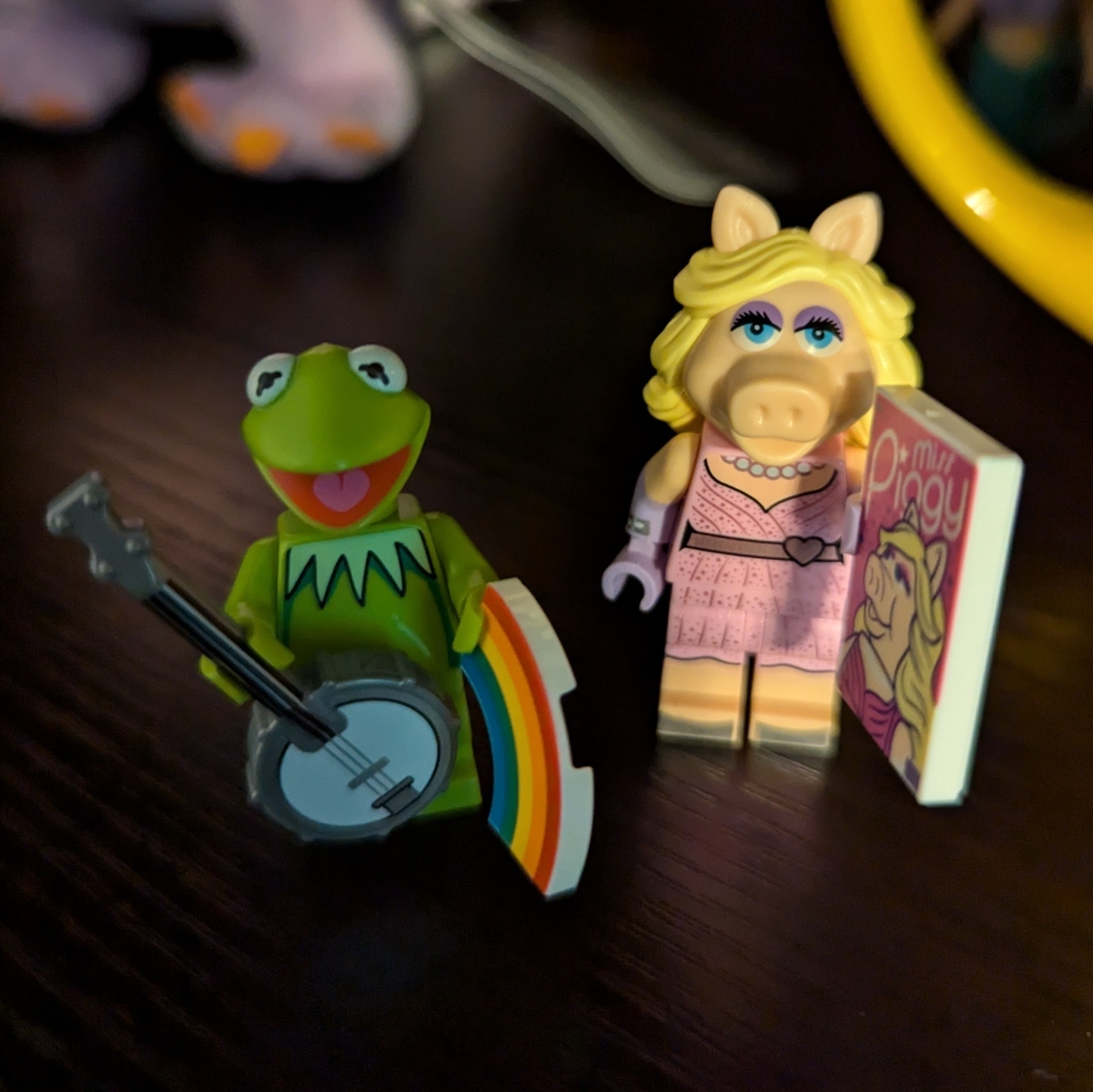
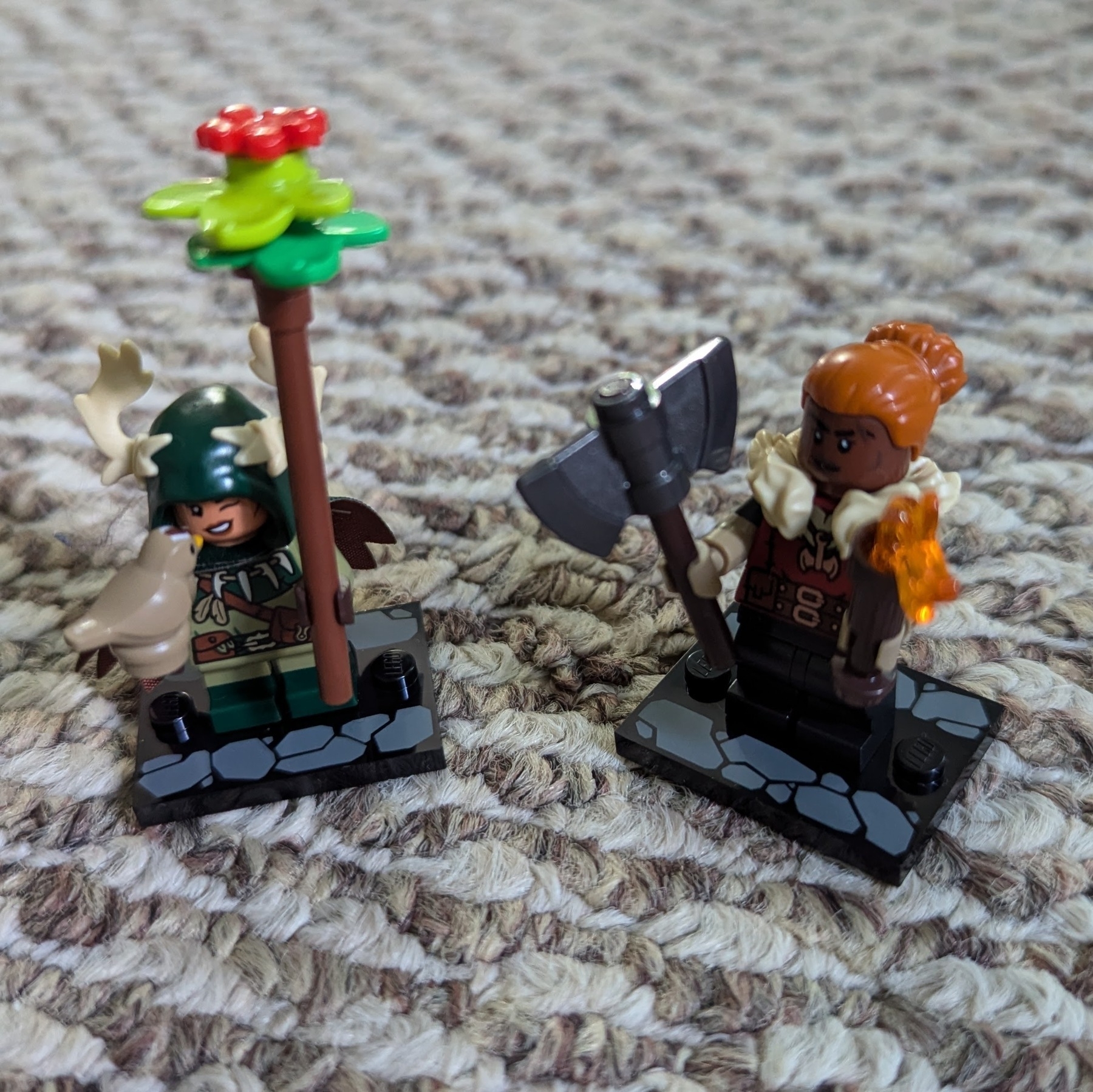
Our local Bricks & Minifigs had their grand opening. W. and I took M. and his best friend. My brother joined us, too. The line was long and it was sunny, but eventually we got in and I got what I had come for: Kermit and Miss Piggy minifigures. W. won the raffle grand prize, which is a Back to the Future Time Machine set signed by the Broadway cast of Back to the Future. I’m torn because this is a set I really want to build but I know building it will ruin any collector value it has, so. I don’t know. I guess maybe I’ll buy the set separately sometime? I also got a couple of the D&D Minifig surprise bags.
W. and I went to see [Clue Live On Stage](https://clueliveonstage.com/, which was incredibly fun. It’s got all your favorite stuff from the movie, and lots of other jokes that you can only do in live theater.
A family we’ve known for a while since their kid and M. have been in school together hosted a Chilean Independence Day party, which was very fun to go to. And I remembered that I don’t need to try Pisco Sour again because it is way too strong for me.
W.’s mom wanted to take M. to Paperhand Puppet’s annual show, so we all went along with M.’s best friend and his dad. The artistry of these giant puppets is incredible and I loved seeing how clever they were doing things like having bubbles come out of fishes’ mouths. The scale of those puppets is not to M.’s liking so I don’t think we’ll go next year, but I do hope to see them at a fairy festival or something sometime because they’re very cool to look at.
My friend K. and I have been playing epistolary RPGs, which are great because he lives in another state. We just have a shared Google Doc to play in. First we played The Only Amenity in This Endless Dungeon is a Daemonic Postal Service and then we started Tether.
We had Back to School Night, where caregivers come and learn a bit about how their kids’ days go and what to expect over the course of the school year. My role was to hang out in the library and chat with the grown-ups who wanted to learn more about the library. It was really great to meet everyone and talk with them about their kids’ use of the library. One parent expressed interest in volunteering in the library, so I’m in the process of getting that set up.
Another parent who has been volunteering in the library for years really started working in earnest once I finally figured out what would be most helpful for her to do, and that has melted away tons of stress I had about not being able to get everything done in 20 hours a week. Is it still enough work for a full-time position? Of course it is, but at least now I can focus my attention on the things only I can do, like instructional support, collaboration, and collection development.
Speaking of instructional support, I put together both print and digital resources for the 1st & 2nd year (equivalent of 1st & 2nd grade) classes about North American animals. This is a fun way for me to learn about what’s already in our collection. I also pulled together statistics about things kids were interested in for a 4th year rounding lesson, which it sounds like the kids really enjoyed.
There’s been one big source of stress, which is that in August I took my and W.’s watches to get their batteries replaced, as a little anniversary gift left over from our anniversary in July (15 years modern gift is watches but we both already had great watches, hence watch batteries) and the glass on W.’s limited edition Mr. Jones Sun and Moon Miyamoto watch got broken. The store employee told me they’d send it to a jeweler and have it ready in a few days. I didn’t hear from them and after a month, I finally went back and asked about it. The store employee took my name down and said he’d look into it and call me. Two more weeks went by and I had no word, so Monday I went down there and was ready to just ask them to give me the watch and I’d take it to a jeweler. But they tracked it down, I laid eyes on it, they corrected my phone number because the original person had written it down wrong, and then they called me later to confirm it was at the jeweler. So here’s hoping that gets resolved soon.
I read 6 books, a bit of a slow down from earlier in the year but what can you do? When you go from unemployed to employed, your reading is going to slow down a bit.
W. and I have been watching the new season of Only Murders in the Building. We watched the latest season of Hilda as a family and finished up a Gravity Falls family watch, too.
My brother and I saw Beetlejuice Beetlejuice in the theater. Beetlejuice is such a critically formative piece of media for me. There was no way its sequel could hold a candle to it in terms of having a place in my heart. But I think they did a great job. It’s super fun and I think has exactly the vibes that a 35-years-later sequel to Beetlejuice should. Also I love our Baby Goth Queen Jenna Ortega.
I played a little bit of Dragon Age: Origins but once my mom was super extra sick, I didn’t want something that intense, so I’ve been playing Disney Dreamlight Valley, which pleases me greatly.
Whew. That’s enough that I think maybe it’s time for me to start doing weeknotes instead of monthnotes.
How was your September?

Finished reading: If I Stopped Haunting You by Colby Wilkens 📚
For anyone following along, here’s the resolution of my notebook question. We have a gorgeous side load leather notebook cover in our house already. I’ve got to figure out what size notebook it uses. Then I’m going to buy traveler’s notebook elastic for it.
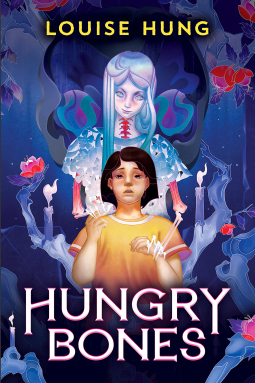
Hungry Bones by Louise Hung is a spooky middle grade novel about a 13 year old girl who learns there’s a ghost in her new house. Here’s the publisher’s description:
A chilling middle grade novel about a girl haunted by a hungry ghost.
Molly Teng sees things no one else can.> By touching the belongings of people who have died, she gets brief glimpses into the lives they lived. Sometimes the “zaps” are funny or random, but often they leave her feeling sad, drained, and lonely.
The last thing Jade remembers from life is dying. That was over one hundred years ago. Ever since then she’s been trapped in the same house watching people move in and out. She’s a ‘hungry ghost’ reliant on the livings’ food scraps to survive. To most people she is only a shadow, a ghost story, a superstition.
Molly is not most people. When she moves into Jade’s house, nothing will ever be the same—for either of them. After over a century alone, Jade might finally have someone who can help her uncover the secrets of her past, and maybe even find a way out of the house—before her hunger destroys them both.
I requested this book from NetGalley for two reasons. First, I’m familiar with Louise Hung from her work with The Order of the Good Death, as producer of Ask a Mortician, and as one of the hosts of Death in the Afternoon. I was excited to see she’d written a book. Second, the kids at work always want more scary books and I thought it would be good to see if we might want to order this one. (Spoiler: We will.)
My favorite thing about this book is what makes it so unique and a story unique to Louise Hung: it is steeped in Chinese beliefs about ghosts, the experience of being Chinese American, and the way shared culture can help us build found family. Molly’s mom, Dot, has hauled her all over the country in an attempt to protect Molly from social consequences of her spooky abilities. But often this has meant Molly has been the only Chinese kid at school, and almost always it means she’s not in one place long enough to make friends. When they move to Buckeye Creek, Texas, Molly expects it will be the same. But it’s not the same, because this time instead of just seeing zaps of dead people’s lives, Molly meets a ghost who, like her, is Chinese American. Jade has been haunting this house for well over 100 years, and Molly is the first person who’s lived in it that looks like her. This understandably means so much to Jade. Together, they work to figure out how to help Jade learn about her past and help Molly settle into a place she doesn’t want to be her future.
Molly and her mom befriend Hazel and Rose Loh, sisters who own a Chinese barbecue restaurant. The restaurant is situated in International Village, a strip mall where most of the businesses are owned by immigrants from all over the world or their descendants. The connection with the Loh sisters expands Molly’s circle and helps her see that maybe Buckeye Creek will be different from all the places she’s lived before.
One of the key roles the Loh sisters play in Molly’s life is as mentors who share with her the history of Chinese migrants that is usually left out of America’s dominant westward expansion narrative. As many as 20,000 Chinese migrants worked to build America’s First Transcontinental Railroad, working in poor conditions for low pay and often dying due to the dangerous nature of the work. The Loh sisters tell Molly that not long after the railroad was finished, Congress passed the Chinese Exclusion Act, banning Chinese migrants from immigrating to the United States and limiting the movement of Chinese migrants and Chinese American people who were already in the U.S.All of this history comes in through the narration of individuals’ experiences, so that rather than feeling like a history lecture it’s grounded in empathy. (See the Publisher’s Weekly review of Hungry Bones for more on this.)
The Loh sisters’ restaurant is also the site of the strongest incident in the book that demonstrates how this history of racism against Chinese people echoes into today and gives Molly an opportunity to shine as she stands up for her found family.
Louise wrote a post for Teen Librarian Toolbox about her experiences being “the Asian kid” and writing her story then and now. I highly recommend it. She also wrote a piece for The Order of the Good Death about hungry ghosts, the Chinese spiritual belief at the foundation of the supernatural elements in Hungry Bones.
The pacing at the start of the book took a little while for me to settle into, and I would have been happy for it to be scarier sooner. That said, I think the atmospheric build as written works if you know that’s what you’re walking into. The book is mostly spooky and only slightly scary; Jade herself is not a scary ghost, but the hungry monster within her can be truly terrifying.
As you may have guessed from the part where I talked about what I loved, the book does not shy away from depicting racism, including horrible treatment of Chinese American domestic workers. It also depicts illness (I think tuberculosis?) in some detail.
As I said, I’ll be ordering this for our school library. I expect it to have a long hold list once one kid gets ahold of it and starts telling others about it.
Bonus: If you join the Order of the Good Death at the Tier Two Member level, you can participate in Mortal Media Club. Louise will be speaking on October 24th. The event is titled “Hungry Ghost Month: When it’s Time to Feed Your Dead.” (I’m a member but that’s my only vested interest in the organization.)
Book: Hungry Bones
Author: Louise Hung
Publisher: Scholastic
Publication Date: October 1, 2024
Pages: 336
Age Range: Middle Grade
Source of Book: ARC via NetGalley
Analog people of Micro.blog (and Mastodon and Bluesky and the open web I guess?), talk to me about those notebook setups where you have a cover and then more than one notebook inside it. What are your favorite products? @cygnoir @annahavron Who else?
I don’t use Fb a lot, but I do check out my On This Day, which today gave me this gem:
“Emilie Wapnick says you can be struggling AND thriving, and I am, all the time."

Finished reading: Operation: Cover-Up by Tate Godwin 📚
📺 Just finished watching the latest season of Hilda. My heart is so full. 🥹
