
Posts in "Notes"

It seems like the authors of Affinity Online (https://nyupress.org/9781479852758/) deliberately chose to use the phrase “online affinity networks” as opposed to Gee’s “affinity spaces,” but the book doesn’t offer an explanation why. The section that explains the term simply states:

We describe the groups we have studied as "online affinity networks" to distinguish them from long-standing affinity groups and networks that have predated the online world. We call them "online" affinity networks as a shorthand to distinguish them from affinity networks that are primarily grounded in place-based activities and organizations, and we are not implying that they are not "real," tied to face-to-face interactions, or embedded in physical infrastructures.

I’m curious about the distinction in terms, especially as the book references Gee’s work. Time to get in touch with the authors!

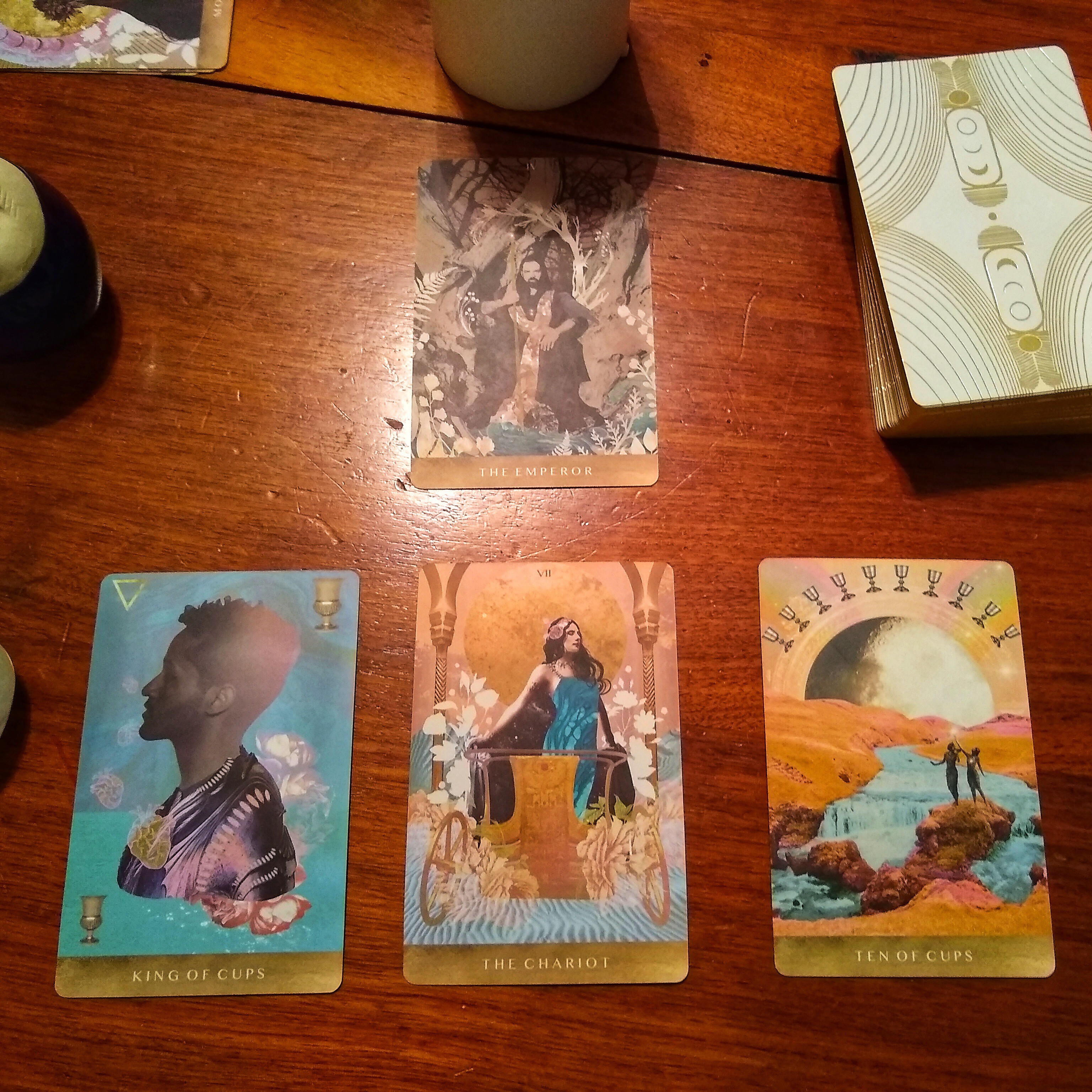
“It will surprise you not one bit,” I said to my friends some months ago after an escape room and lunch, “that the only reason I got into Tarot is because of a Piers Anthony novel.”

Returning to my reading roots today with my desert island book. It’s worth noting that as so many book covers are, this one is whitewashed.

I don’t expect it will have aged well, but I’m going to give it a try anyway.

Key summer goth accessories:

  • parasol
  • handfan
  • cooling scarf
  • sunglasses
  • sunscreen
  • scent of cloves & absinthe

The end of this keynote gets at exactly what I was talking about in my last post.

When we own our own data, We can look back at who we were who we thought we were. We can see who we really were, who we are, and, most importantly, the trend of our becoming who we want to become. With our own data, we can curate, we can shed who we were to become who we want to be, and we can write the end of our own story.

For this is the true power of owning our own data: to understand the cycles of contractions and expansions, to understand our hero’s journey, and to write our own story.

True fact: 100% of my group cosplay ideas are aimed at getting @tceles_b_hsup in a long wig + bish af.


To distract me from my current “The world is a garbage fire” emotional spiral, here’s a bunch of labels I’m okay with, woo-woo or otherwise.

  • Type A-
  • Obliger
  • Cancer
  • 4
  • INFJ
  • Projector & my voice values: enthusiasm, helpfulness, transparency & my signature strengths: humor, love, creativity, love of learning, curiosity

📚 Gee, J. P. (2004). Situated Language and Learning : A Critique of Traditional Schooling. London, United Kingdom: Routledge.

Gee introduces the concept of affinity spaces in this book, pointing out that popular culture is ahead of schools in the construction of “specially designed spaces (physical and virtual) constructed to resource people tied together, not primarily via shared culture, gender, race, or class, but by a shared interest or endeavor” (2004, p. 4). He argues that “people learn best when their learning is part of a highly motivated engagement with social practices which they value” (Gee, 2004, p. 77) and offers affinity spaces as an example of a space that facilitates this kind of engagement.

Gee contrasts affinity spaces with communities of practice as proposed by Lave and Wenger (1991), arguing that defining a community implies labeling a group of people, including determining “which people are in and which are out of the group, how far they are in or out, and when they are in and out” (Gee, 2004, p. 78). Talking about spaces instead of communities removes this concern of membership; people who are present in a space may or may not be part of a community.

Gee identifies some key components of any space, not just an affinity space: content, generators, content organization, interactional organization, and portals. Content is what the space is “about,” and is provided by content generators. Gee uses the example of a video game, which generates a variety of content (words, images, etc.). The space is then organized in two different ways: content is organized by the designers, whereas interaction is organized by the people interacting with the space, in how they “organize their thoughts, beliefs, values, actions, and social actions” (Gee, 2004, p. 81) in relationship to the content. This interaction creates a set of social practices and typical identities present in the space. The content necessarily influences the interaction, but interaction can also influence content. For example, with a video game, player reactions to the game may influence future updates to the game. Finally, Gee defines portals as “anything that gives access to the content and to ways of interacting with that content, by oneself or with other people” (Gee, 2004, p. 81). In Gee’s video game example, this could be the game itself, but it could also be fan websites related to the game. Portals can become generators, “if they allow people to add to content or change the content other generators have generated” (Gee, 2004, p. 82). A video game website might include additional maps that players can download and use to play the game or offer recordings of gameplay to serve as tutorials or entertainment. A generator can also be a portal; for the video game example, the game disc or files both offer the content and can be used to interact with the content.

Gee builds on this description of a space to describe “affinity spaces,” a particular type of space that young people today experience often. The “affinity” to which Gee refers is not primarily for the other people in the space, but for “the endeavor or interest around which the space is organized” (Gee, 2004, p. 84). He defines an affinity space as a space that has a number of features:

“Common endeavor, not race, class, gender, or disability, is primary” (Gee, 2004, p. 85). People in the affinity space relate to each other based on common interests, while attributes such as race, class, gender, and disability may be used strategically if people choose.
“Newbies and masters and everyone else share common space” (Gee, 2004, p. 85). People with varying skill levels and depth of interest share a single space, getting different things out of the space in accordance with their own purposes.
“Some portals are strong generators” (Gee, 2004, p. 85). People can create new content related to the original content and share it in the space.
“Content organization is transformed by interactional organization”(Gee, 2004, p. 85). Creators of the original content modify it based on the interactions of the people in the space.
“Both intensive and extensive knowledge are encouraged” (Gee, 2004, p. 85). Specialized knowledge in a particular area is encouraged (intensive knowledge), but the space also encourages people to develop a broad range of less specialized knowledge (extensive knowledge).
“Both individual and distributed knowledge are encouraged”  (Gee, 2004, p. 86). People are encouraged to store knowledge in their own heads, but also to use knowledge stored elsewhere, including in other people, materials, or devices, using a network of people and information to access knowledge.
“Dispersed knowledge is encouraged” (Gee, 2004, p. 86). One portal in the space encourages people to leverage knowledge gained from other portals or other spaces.
“Tacit knowledge is encouraged and honored” (Gee, 2004, p. 86). People can use knowledge that they have built up “but may not be able to explicate fully in words” (Gee, 2004, p. 86) in the space.
“There are many different forms and routes to participation” (Gee, 2004, p. 87). People can participate in different ways and at different levels.
“There are lots of different routes to status” (Gee, 2004, p. 87). People can gain status by being good at different things or participating in different activities.
“Leadership is porous and leaders are resources” (Gee, 2004, p. 87). No one is the boss of anyone else; people can lead by being designers, providing resources, or teaching others how to operate in the space. “They don’t and can’t order people around or create rigid, unchanging, and impregnable hierarchies” (Gee, 2004, p. 87).

Gee argues that as young people encounter more and more affinity spaces, they see a “vision of learning, affiliation, and identity” that is more powerful than what they see in school (Gee, 2004, p. 89).

Gee, J. P. (2004). Situated Language and Learning : A Critique of Traditional Schooling. London, UNITED KINGDOM: Routledge.

Lave, J., & Wenger, E. (1991). Situated learning: Legitimate peripheral participation. ; New York: Cambridge University Press.

Me, to my colleagues: I could really use a tote bag for the flight home. Y’all think I’ll be able to find a tote bag at this librarian conference? #alaac19

Austin Kleon talks about daily blogging as being related to the ideas of stock and flow, and I think that really gets at what you’re talking about here. I love thinking about it this way, the way little ideas become big ones and how much easier it is to iterate, flesh out, and track our own thinking when everything is in one place.

Current wishlist: everything at this shop, which bills itself as “Goth Mom Central,” but most especially the Strange and Unusual hat, which I desperately want to obtain before I go wander in hot hot hot ATL & DC in June. [Image: woman wearing a black wide-brimmed straw hat with the words STRANGE & UNUSUAL embroidered on it in white text, all caps.]