Posts in "Long Posts"

Stop optimizing. Start nourishing.

A week ago, my friend shared the video for Lizzo’s song “Juice.”

I commented, “I want to feel as cute as she is.”


I started watching Dietland last week. I got to the scene where the main character, Plum, goes to her Waist Watchers meeting, and everything they talked about started to feel familiar:

Logging literally every bite you eat. Telling yourself you’re doing it to look good naked.

When Janice showed up with her amazing dipped hair and fabulous eye makeup and colorful clothes, I loved her immediately. And then when she responds to the idea that she is here to be her best self with “Excuse me?” and then launches in to her lovely monologue:

I love myself... I came here to get some help to lose weight because I have back problems, not because I hate my body... I am a unicorn. I am a goddess.

I was ready to cheer.

In the one-on-one at the end of the scene, the facilitator reminds Plum that, “Food is fuel. That is all.”

Later, there’s a scene where Plum absentmindedly licks a little bit of frosting off her finger, then realizes what she’s done and runs to the sink to try and spit it out.

There are a million tricks: put half your food away as soon as you get it at a restaurant. (I actually like that one.) Drink water and fill up on vegetables before you go to a party so there will be no room in your stomach for treats. And there are all of the fashion rules to make you look slimmer, too: black. Only vertical stripes. Prints on a very precise scale to match your body.

I realized watching Dietland how tired I was of this nonsense.

I have been trying to lose weight since I was 20 years old. And I know I started later than many other people. I have tried Slim-Fast. I have tried ChangeOne. I have tried the Fat Flush diet. I have done two elimination diets. I have walked on the treadmill. I have done the rowing machine. I have done bodyweight exercises. I have used hand weights. I have used gallon jugs as weights. I have done all the things you can do to make water taste better. I have brought my own special foods to parties.

And I’ve also tried intuitive eating and Health at Every Size.

The only correlation I have found between my actions and my body’s shape is that when I eat fewer inflammatory foods, I’m less-inflamed. So that informs how I think about food. Food is one of life’s great pleasures. It is a centerpiece for social functions. It is a source of comfort. And it is fuel. I want to give my body anti-inflammatory, mostly whole foods, because it gives me energy and is more flavorful. But not to punish it for being the wrong size or shape.

Lizzo said in this interview with the New York Times, “I had to really look myself in the mirror and say, this is it…This is the person I am going to be for the rest of my life and it is not going to change.”

I need to love this vessel I’m in. This chronically ill, hard-to-clothe piece of flesh that carries me around the world, that created the most amazing person I’ve ever known. I need to get okay with it truly at every. Size.


But my body shape isn’t the only way I’m not too much or not enough. I remarked on how I tried literally all the things that Anne Helen suggests won’t fix burnout.

I’ve tried a million things to fix my mood - not things that move directly toward giving me the neurotransmitters (a thing I wholeheartedly endorse getting via pharmaceuticals if your body isn’t making them), but things that indirectly help: sun lamps. Fish oil supplements. Scheduled friend times. Gratitude journaling. Affirmations.

I’ve tried gamifying my habits with Habitica and Fitocracy.

I have more than five different books about how to get my home organized and keep it clean. It isn’t organized. It’s only clean because my husband cleans it.

I have two different books about improving my wardrobe. I have four about fixing my finances.

I subscribe to two self-care newsletters and two self-care podcasts. But at this point, self-care feels like another to-do list item that overwhelms me, not something that actually involves caring for myself.

I read this New York Times piece on the genius of insomnia, and thought about all the different ways I’ve tried to fix my “bad sleep hygiene.” Red light bulbs. Blue light filters on my devices. Yellow glasses. White noise. Audiobooks. No caffeine after 4 pm. Using the bedroom for nothing but sleep.

And then I thought, “What if everything I am - everything I’ve tried to improve in this particular, optimizing, tool-utilizing way, is just fine?”

And then I thought, “Well, what if I try living as if it is, anyway?”

What if I give all facets of myself the nutrients they need, without judgment? What if I purchase things from companies that affirm the idea that I’m already great, rather than selling me the idea that I need to be corrected? What if, when I wake up at 4 am, I don’t chastise myself for being a bad sleeper, but instead use that time to relax while awake? What if the only self-improvement projects I take on are related to my curiosity, my desire to grow and learn?


And I decided I will live this way. I’m going to operate on the assumption that everything about me is exactly enough.

I’m going to stop optimizing.

I’m going to start nourishing.


On Millennial burnout

Some notes on Millennial burnout. This started as a Twitter thread because I needed a frictionless place to write my initial ideas, and apparently I was hoping they would get some attention. (They didn’t, really, and that’s fine now that I’ve slept on it.)

Anne Helen’s excellent piece on Millennial burnout sketches out a framework for us to think about why (white, middle class) Millennials are burned out. She admits that a framework is not a solution, and in her newsletter that acts as a sort of commentary track she talks about both why she didn’t use academic jargon (BLESS HER) and also didn’t offer a solution (which I’m sure is disappointing/frustrating for some people). Tiana Clark offers a valuable critique about the limits of this sort of generational thinking and its failure to capture the experiences of people of color. Helen published additional perspectives on what Millennial burnout looks like for different people: black women, first-generation immigrants, queer people, chronically ill people, people with disabilities, people at the intersections of more than one of these identities, and more.

I’ve collected some less in-depth pieces on the phenomenon in my Pocket, like Kristin Iversen’s Why Millennials Are Always Tired (found via Holisticism’s newsletter), which approaches Millennial exhaustion more from the perspective of the youngest Millennials, as opposed to Helen’s piece coming from the perspective of older Millennials. (Jesse Singal’s Don’t Call Me a Millennial – I’m an Old Millennial is my favorite piece that makes it clear how old Millennials and young Millennials differ and what the inflection points are for Millennialness.)

Helen says:

You don’t fix burnout by going on vacation. You don’t fix it through “life hacks,” like inbox zero, or by using a meditation app for five minutes in the morning, or doing Sunday meal prep for the entire family, or starting a bullet journal. You don’t fix it by reading a book on how to “unfu*k yourself.” You don’t fix it with vacation, or an adult coloring book, or “anxiety baking,” or the Pomodoro Technique, or overnight fucking oats.
This is basically a caricature of my life. I have been an avid follower of Lifehacker, obsessed with Inbox Zero, installed and uninstalled Headspace and Calm, prepped meals for the week ahead, used a Bullet Journal for approaching five years, read and re-read Unf*ck Your Habitat, have the immense privilege of being able to take a beach vacation annually, have a huge stack of adult coloring books, anxiety baked my way through my Master of Science degree, powered through PhD writing using the Pomodoro Technique, and had overnight oats for breakfast every day for a week. (Other things that won't fix it: mason jar salads. An Instant Pot. Subscribing to every self-care newsletter and podcast. Witchery.)

And I agree with Helen that

...individual action isn’t enough. Personal choices alone won’t keep the planet from dying, or get Facebook to quit violating our privacy. To do that, you need paradigm-shifting change.
But at the same time, I can't sit and wait on that paradigm shift. Helen doesn't have a plan of action, but I need one. So that's what I nattered about in that Twitter thread. And here it is, summed up:

We have to perceive ourselves, and by extension others, as creatures of inherent worth, not merely parties to transactions, in spite of existing within an economic system that views us exactly as such. Tiana Clark points out that being a literal commodity was an actual, physical reality for black people until 1865. I think our economic system still relies on people seeing themselves as engines or tools.

I think we have to reject that idea with our whole hearts.

When I was a freshman in college, I saw a clinical social worker in my school’s Counseling and Psychological Services department. I saw him once and never again, because he enraged me. But now, almost 20 years later, I’m realizing he was really right in one thing about his assessment of me. He’d asked me to tell him about myself. And after I did, he’d pointed out that everything I’d told him was about my achievements: the grades I’d gotten, the scholarships I’d won. I left angry. Of course those things were how I defined myself. Of course those things were what made me a person of value in the world.

My 18 year-old-self had completely bought into the idea that her value could be measured and had to do with the production of valued things. (In my case, scholarly output. That’s still the valued thing I try to produce.)

Almost-38-year-old me is ready to reject that idea. I have value because I am a person who exists. I don’t need to be productive all the time. I feel a sense of purpose when I work, but that work is not what makes me a person.

The current version of me is ready to move into this way of thinking.

But, as I admitted in my Twitter thread…

I’m not there yet.

For more on “fixing” Millennial burnout, read Jessanne Collins’s Having a Kid Was the Unexpected Cure for my Millennial Burnout. It resonates with my experience as a mother of a young child.

Noah Smith identifies another piece of the burnout puzzle when he says Burned-Out Millennials Need Careers, Not Just Jobs. (Ask any stereotypical Millennial about their #sidehustle.)

Many thanks to Austin Kleon for first running Anne Helen’s piece across my radar.

Featured image is my favorite panel from Joss Whedon’s run on the Astonishing X-Men, Vol 3 #22, drawn by John Cassaday. Colors by Laura Martin. Letters by Chris Eliopoulos.

2019 Word of the Year: PHASE

It’s January 9 and I’m finally ready to talk about my intentions for this year.

I selected PHASE as my word of the year because I wanted to capture my intention to be chill in the face of cyclical experiences. To accept that my energy will ebb and flow. To surf the big waves when they come, being as productive as I can, and then to rest at low tide, letting my body recover. To recognize that whatever hard parenting moment I’m having at any time is just that, a parenting moment, even if it’s a moment where my kid doesn’t sleep for longer than two hours at a stretch for four weeks, because eventually we’ll come back around to a 6, 7, 8 hour stretch.

One of my favorite lines from the Aeneid is Book I, line 199: “dabit deus his quoque finem” (forgive the lack of macrons, please) - which comes from an even better couplet:

O socii—neque enim ignari sumus ante malorum— O passi graviora, dabit deus his quoque finem.
 

As happens so often, translating this directly is a challenge. And I don’t have my Fagles at hand and I’m not content with the Williams or Dryden translations at the Perseus Project, so I’ll paraphrase. At this point, Aeneas and his friends/comrades, who have sailed away from Troy, narrowly escaping death at the hands of the Greeks in the Trojan war, are shipwrecked at Carthage. And he rallies them, telling them, essentially, “We’ve been through bad stuff before; we’ve endured harder challenges than this; god will give an end to these things, also.” It’s the Wheel of Fortune in the Tarot. It’s the Circle of Life.

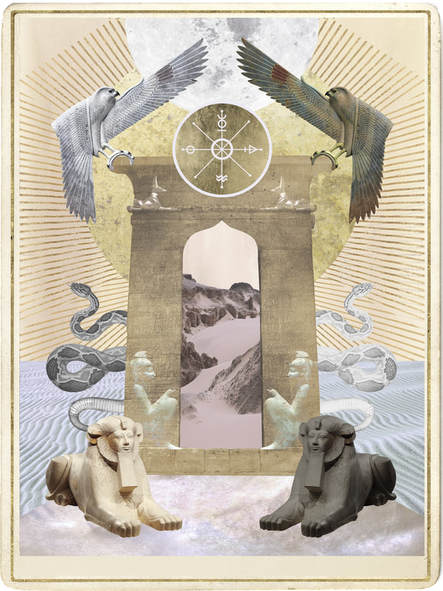
[caption id=“attachment_6507” align=“aligncenter” width=“443”]Wheel of Fortune from the Moonchild Tarot Wheel of Fortune from the Moonchild Tarot.[/caption]

Each of us has survived up to this point, and whatever we’re dealing with now, things will change before too long. And that might mean they’re worse, or it might mean they’re better, but whatever they are, they’ll be different.

That’s the key interpretation the Tarot reader gave me of the Wheel of Fortune right before my birthday, and it is the energy that I, as a chronically ill woman, as a mother, need to embrace. It is one of my key lessons in life: you’re strong, you’ve gotten through everything so far, you’ll get through this too. Don’t get too comfortable, don’t get too complacent, don’t despair too much.

So PHASE is my word, which captures cycles like the moon, which captures stages of projects, which in its verb form can be defined as “to adjust so as to be in a synchronized condition.” Also, it’s what you call it when Kitty Pryde uses her power.


I’m not big on resolutions, but here are the things I’m feeling/trying this year:

  • Embracing the PHASE energy.
  • Really owning my Mer-Goth/#seawitchvibes aesthetic.
  • Reading for pleasure more.
  • Having a good time.
That last one came from a fun Twitter autotext meme:

I think my phone’s keyboard is on to something.


Featured image is the 2019 Celestial Calendar by Rivtak. I put one on my Christmas list and got it. You can get your own here.

What Kimberly Wrote, 12/12/2018

I wrote 2 pages about new models of information literacy in affinity spaces today, or about 968 words.

I’m trying a new thing with my writing. Usually my process is Read > Take Notes > Concept Map > Outline > Write, the whole paper at once. But right now I’m trying a thing where it’s Read > Take Notes > Quick Outline > Write for just a small chunk of the paper and I’m really liking it.

I’ve probably read that this was a good way to write in a million places, but I can’t identify any of them right now.

There are lots of gaps, but I wouldn’t even know those gaps were there before I started writing, so there we are. If you’ve been struggling, maybe try this more cyclical writing process.

Toward a personal brand

I find myself admiring people who seem together. They are well-coiffed. Their clothes are carefully styled. They welcome you into their homes and effortlessly manage to make it feel like everything is totally fine and will continue to be so. They are pleasant. They are calm.

I recently gave myself permission to accept that I will never be one of these people.

Smooth and collected will never be part of my personal brand.

Then I gave myself permission to think about what is, naturally, part of my personal brand, and go all-in on that. Here’s what I came up with:

  • scholarly
  • whimsical
  • geeky
  • magical
  • enthusiastic
  • bada** who gets sh*t done
  • big and epic but also sparkly
  • warm
  • loving
And you know what? I really like all that stuff.

“I forgot to create a personal brand” card by Emily McDowell. You can buy it! There’s also a mug and a magnet.

Dissertating in the Open: Putting Together a Committee WITH TEMPLATES!

Y’all, I’m scholarlily-enamored of my committee. (Scholarlily is a new adverb. I give it to you.) Everyone on it is so cool and down-to-earth and does interesting work.

Want to know how to get an awesome committee like mine? Well, I can’t tell you, but I can tell you how to request that someone serve on your committee. After meeting to discuss my prospectus and where we thought my comps should go, my advisor and I planned for me to request that certain people serve on my committee, with her sort of taking over committee organization/management after they agreed to serve.

In my department, a dissertation committee consists of five people and at least one of them must be external to the department. We identified four people to be on my committee; the advisor is always the chair of my committee. We chose two professors from within the department, and two from outside the department. Here’s my prospectus in case you want to review it again. And here’s my committee:

Sandra Hughes-Hassell: My advisor. She’s on the committee of course because she’s my advisor, but also because of her interest in youth services.

Casey Rawson: A friend, colleague, and classmate from my MSLS days. She’s a professor of research methods, so she is my research methods expert. Youth services is also an area of research interest for her. In addition to her areas of research expertise, she has personal interests in fandom and crafting, both of which make my topic of interest to her.

Brian Sturm: A professor who taught me in my MSLS days. He studies immersion, and boy is cosplay about being immersed, right? Also helpful to have on the committee because of his expertise in youth services.

Heather Moorefield-Lang: My first external committee member. She’s got expertise in qualitative and has done a lot of research on makerspaces. Because I see making as a key element in cosplay, I wanted her on my committee. She also used to be a theater teacher and I am a lapsed theater person, so I expected there might be some good personality fit there. (I’m pretty sure I was right.) I didn’t know her, but I’d interacted with her some on Twitter and Sandra had met her at the Tennessee Association of School Librarians conference.

Crystle Martin: My second external committee member. If you’re basing your whole study on providing confirming evidence for/extending someone else’s study, it’s nice to have that person on your committee. She’s also a Connected Learning expert, and that’s a framework I definitely want to bring into my dissertation work, as it’s kind of my whole reason for getting a PhD. I also had expected a good personality fit here, as we share interests in fandom and gaming. (She once spoke on a panel called “What Buffy the Vampire Slayer Has to Teach Us about Games, Education, and Self-directed Learning,” soooo…) I had met her once about three and a half years ago, when she came to campus for a visit and I was working in the School of Education.


So Sandra and I settled on these four people to ask to serve, but then it was up to me to actually contact them. I looked around on the internet for examples of how to invite people to be on your dissertation committee and found a little advice but no clear templates. So, keeping in mind the advice from the blog post The Basics of Professional Communication, Part I, I set about constructing my own, which I will share with you in just a moment.

But first, a note: please remember that you are requesting a service, not conferring an honor. Serving on committees is part of professional service for faculty members. But also, if they accept, they are doing you a favor. So try to keep that in mind in your verbiage.

Now, three templates for asking someone to be on your committee! But be sure to read after the templates for one more note.

1. Someone you already know well (in my case, Brian and Casey)

Dear [Recipient Name]:

I hope this semester is treating you well. [Include some more conversational detail if you like.]

I am in the process of putting together my dissertation committee, and your expertise in [recipient’s area] would be very helpful. Would you be willing to be on my dissertation committee? I’ve written a brief draft prospectus for my dissertation research that you can review here: [link to your prospectus]

[Information about who will follow up - you or your advisor; scheduling a first meeting; any additional information you might provide later such as a bibliography]

If you have any questions, feel free to email me. Thank you for considering this request.

Sincerely, [Your name/email signature]

2. Someone you’ve met but don’t know well

Dear [Name]:

My name is [your name], and I am a [your year] doctoral student at [your institution and department] working with [your advisor]. For my dissertation, I am planning to research [your topic/research question]. [A one-sentence reminder of when and how you met.]

I am in the process of putting together my dissertation committee, and your expertise in [recipient’s area] would be very helpful. Would you be willing to be on my dissertation committee? I’ve written a brief draft prospectus for my dissertation research that you can review here: [link to your prospectus]

[Information about who will follow up - you or your advisor; scheduling a first meeting; any additional information you might provide later such as a bibliography]

If you have any questions, feel free to email me. Thank you for considering this request.

Sincerely, [Your name/email signature]

3. Someone you’ve never met

Dear [Name]:

My name is [your name], and I am a [your year] doctoral student at [your institution and department] working with [your advisor]. For my dissertation, I am planning to research [your topic/research question].

I am in the process of putting together my dissertation committee, and your expertise in [recipient’s area] would be very helpful. Would you be willing to be on my dissertation committee? I’ve written a brief draft prospectus for my dissertation research that you can review here: [link to your prospectus]

[Information about who will follow up - you or your advisor; scheduling a first meeting; any additional information you might provide later such as a bibliography]

If you have any questions, feel free to email me. Thank you for considering this request.

Sincerely, [Your name/email signature]

Some notes:

When selecting what to call the recipient in the greeting, here are my general guidelines:

  1. If it's someone I know well, I use the name that I know they prefer. In my department, some professors prefer students use their first name, others prefer their title and last name, and others might prefer a title but last initial, so that their expertise is recognized but the relationship is still a little informal. Respect what this person wants to be called.
  2. If it's someone I have only met once or don't know at all, I use the title and last name. Once they're on the committee and you're actually having meetings, you may end up calling them by first name as I have in the blog post above. But always begin from the most formal position possible.

All of the people I requested to be on my committee accepted, and we had our first meeting last week, which is why next time on Dissertating in the Open, I’ll write about Your First Meeting with Your Committee!

Thanks to Jegged.com for the Final Fantasy VII Party Select Screen Image.

Dissertating in the Open: Designing a Comprehensive Literature Review

I think every doctoral program is different in what they expect from students for qualifying comprehensive examinations, but in my program, there are two components: a literature review of about 50-60 single-spaced pages that offers an overview of the student’s research interests and addresses theoretical, methodological, and topical literature related to the expected dissertation, and a brief prospectus for the dissertation.

I wrote the prospectus first. Honestly, I think everybody should. Then my advisor and I met and discussed what should be in the comprehensive literature review. We wanted to have five areas to propose to my committee, with the understanding that these might change after our first meeting with my committee. Based on the prospectus, we settled on the following five areas:

Information literacy. As my central research question is about information literacy practices, I need to have a thorough definition of information literacy as a concept and an understanding of the historical development of that concept.

Cosplay. Since the cosplay affinity space is the locus of my research, this was an obvious choice.

Theory. It’s expected that all comps packages in my department will have a theory section. I chose to focus on theories Martin (2012) used in her dissertation: earlier models of information literacy, Sonnenwald’s (2005) framework of human information behavior, James Paul Gee’s (2004) concept of affinity spaces, Levy’s (1997) concept of collective intelligence, and Jenkins’s (2009) concept of participatory culture. There are other theories that may come into play, but I haven’t identified them yet. Theories I’ve researched in the past include possible selves, situated learning and communities of practice, and cultural-historical activity theory (especially horizontal learning). None of these are necessarily going to show up in my comps, but each of them has the potential to be useful for my dissertation work, so depending on how thorough I end up being with the theories mentioned earlier, they may end up in there.

Methods and Data Analysis. This is another section that is expected by the department. My proposed methods are primarily qualitative, involving interviews and qualitative coding, so this section will focus on those. It does have one quantitative element, however: analytic description, “an analysis method to illustrate transforming qualitative data into numbers and coupling that with qualitative description” (Martin, 2012, p. 78), so I included mixed methods in here as well.

Connected Learning. Finally, although it isn’t mentioned explicitly in my prospectus, my advisor and I decided to include Connected Learning in my comps package. Connected learning in libraries is my central research interest, and cosplay definitely has all of the characteristics of connected learning, so this is a good fit for my fifth area.

I hope this has been helpful as you think about your own qualifying exams and which areas you should be reviewing to prepare for your dissertation.

Next on Dissertating in the Open: Contacting Potential Committee Members!

References

Martin, C. A. (2012). Information literacy in interest-driven learning communities: Navigating the sea of information of an online affinity space. The University of Wisconsin-Madison. Retrieved from search.proquest.com/docview/1…


Adulting achievements

After yesterday’s musings on adulting, I found myself looking for various resources that indicate what some components of adulting are. I found my way to the syllabus for Adulting: Coming of Age in 21st Century America at Georgia Tech, which assigned some videos from the YouTube channel How to Adult. As I started to skim the video titles, I realized that there are, in fact, many things I am quite adult enough to handle. I thought I’d make a list, just to help me remember how very grown up I am on the days when I eat cake for breakfast and my child is the only person who I can manage to dress appropriately for the occasion and weather.

I can:

  • do my taxes
  • do laundry
  • furnish a kitchen
  • cook
  • write a resume
  • succeed in a job interview
  • open a bank account
  • bake
  • declutter & organize
  • quit a job
  • write a cover letter
  • open a retirement account
  • write thank you notes (though of course I don't as often as baby boomers and their parents would like)
  • buy a house
  • get a new car insurance policy
  • start a new job
  • make coffee (three different ways!)
  • meal plan
  • party plan
  • host a party
  • manage a pregnancy
  • care for a child (including feeding, changing, bathing, clothing, entertaining)
  • choose a doctor
  • enroll in health insurance
  • use a library
  • send mail
  • take out a loan
  • repay a loan
  • use public transportation
  • use a slow cooker
  • unclog a toilet (including using a toilet snake/auger!)

And this is just a small sampling, based on the How to Adult video channel! I can also:

  • take my own measurements
  • purchase clothes that fit and make me feel confident
  • get a mortgage
  • connect utilities
  • pay bills
  • buy a car
  • make tea (in a bag or loose leaf!)
  • assert myself in interactions with a doctor
  • replace the items from a stolen wallet
  • drive
  • put gas in a car
  • buy a plane ticket
  • navigate an airport
  • use a pressure cooker
  • use a microwave
  • use a toaster oven
  • use an oven
  • handwash dishes
  • load and run a dishwasher

And of course there are many more things I can do!

Probably we each need to cut ourselves a break sometimes and recognize how awesome we are and all the stuff we can do.

On adulting


There's a whole cottage industry devoted to teaching Millennials basic life skills. Are young adults that hapless, or is being a grown-up really harder now?

Pocket suggests things for me to read, and a few weeks ago, it suggested I read this piece about adulting. As I lay in bed, my toddler sleeping peacefully beside me, I thought, “I really need adulting help.” Which in one sense is ridiculous, because I have been doing some adulting basics, like holding a steady job, or paying rent or utilities, for almost 18 years. My adult self is, in fact, an adult.

But then I look at my immensely dirty car, or think about the extreme level of disrepair my home has fallen into over the past six years of home ownership, or remember that W. is the one who does the laundry and the dishes and the cleaning and the yardwork and I think…

Yeah. I could use some help.

I had a revelation a couple weeks ago while driving and noticing that my windshield wipers need to be replaced. I’m really good at projects. In one sense, it’s completely correct that my personal brand could be KIMBERLY: SHE GETS THE JOB DONE. If the job has a clear objective and a defined endpoint. I can manage human and material resources to make magic happen.

If, on the other hand, the job is a repetitive task directed at maintenance that will need to be done over and over again (like laundry or dishes or toothbrushing), then I’ll have to work harder to create a system to make sure it happens.

I’m trying to figure out what those systems look like.

Maybe acknowledging that all of life is a process of incrementally improving and coming up with ways to hack your brain is the real adulting.


Dissertating in the Open: Identifying a Research Question & Writing a Prospectus

First, huge thanks to Dr. Laura Gogia for the descriptive phrase “Dissertating in the Open.”

Early on in my PhD program, I decided that I wanted to be as transparent about my dissertation process as is ethically possible. Since I’m focused on studying Connected Learning, and openly-networked products are a key part of that framework, I wanted to share my own process. This blog post is the first step in that direction.

When I came into this program, several of my cohort-mates already had clear ideas not just about their area of research interest, but about their specific dissertation projects. Others took a hard turn and completely shifted their research interests. I’ve followed a middle route; while I wasn’t zeroed in enough to turn every assignment into a chapter in my dissertation (or even my literature review), everything I did was somehow focused on interest-driven learning. But I was never clear on how it all would come together in a culminating research project.

Over the past three and a half years, I’ve probably floated almost 10 different dissertation topics or themes past my very understanding advisor, but none of them quite coalesced into a question. I should have known that the question would come out of the literature. My best research always comes from someone else’s “Possibilities for future research” section.

A few weeks ago, I was reading Dr. Crystle Martin’s (2012) dissertation. She investigated the information literacy practices of players in the World of Warcraft affinity space and, based on previous prescriptive models of information literacy and her own results, generated a new, descriptive model of information literacy for digital youth.

And then in her conclusion, she said:

“The more affinity spaces which are studied, the more stable the model will become, until eventually it will be a powerful predictive model that can approximate outcomes when parameters are changed” (p. 108).

I physically actually got chills. But I wasn’t sure how I would tie this into my own work.

Then I went to the Distant Worlds: Music from Final Fantasy concert and saw the cosplayers.

Then I re-read Dr. Martin’s dissertation.

Then I realized cosplay is an affinity space.

Then I sat down and over the course of a few hours banged out a dissertation prospectus to send to my advisor. It’s just a first draft. But I wanted to share it for those of you who are inexperienced in writing them. I’m lucky that my professor Dr. Barbara Wildemuth really walked my cohort through this process. Comments are open, so feel free to annotate it up and ask questions.

Next time, on Dissertating in the Open: building a comps package based on your prospectus!